





What are event tags and attendee tags in idloom?
Tags in idloom are short, colour-coded labels you attach to events or to attendees. Event tags classify events, for example "Conference", "Webinar" or "Internal".

Attendee tags classify people, for example "VIP", "Speaker" or "Sponsor".

You create each tag once in Tags & metadata and reuse it across all your events, so every team works with the same vocabulary.
| Event tags | Attendee tags | |
|---|---|---|
| What they label | Events | Attendees |
| Where you assign them | Events list Tags column, event Essentials tab | Attendee details, bulk Edit attendee tags |
| Where you use them | Events list, Filter events, event catalog filters, exports, API | Attendee list, segments, exports, API |
| Who sees them | Back office users, and catalog visitors when used as a catalog filter | Back office users only |
| Where a tag can be created | Account, profile, or inline in an event | Account, profile, or inline on an attendee |
What do you need before you start?
To manage tags in idloom, you need:
- The right plan: an idloom account on the Premium or Corporate plan.
- The right permissions: a role with the Tags & metadata permissions (Read, Create, Update, Delete). Your account administrator sets these per role in the Identity module.
- Access to the right profile (Corporate plans): account administrators see all tag fields; other users only see the tag fields of the profiles they have access to.
How do you create a tag field in idloom?
Tags live in a tag field, for example "Event tags" or "Attendee tags". Go to Settings → Events settings → Tags & metadata, click + Add metadata and choose Event tag or Attendee tag. Each account, and each profile on Corporate plans, can hold one of each.
Three options shape how your team uses the field:
- Allow new values to be created inline: lets your team create tags directly from an event or an attendee. Untick it to keep a controlled list.
- Add to event filters: makes the tags available in the events list filters.
- Available for profiles (Corporate plans): shares the field with the profiles you select.
The tag field now appears in the List of metadata, with its Owner (Account or Profile) and the profiles it is Available for.
How do you add, rename and colour tags?
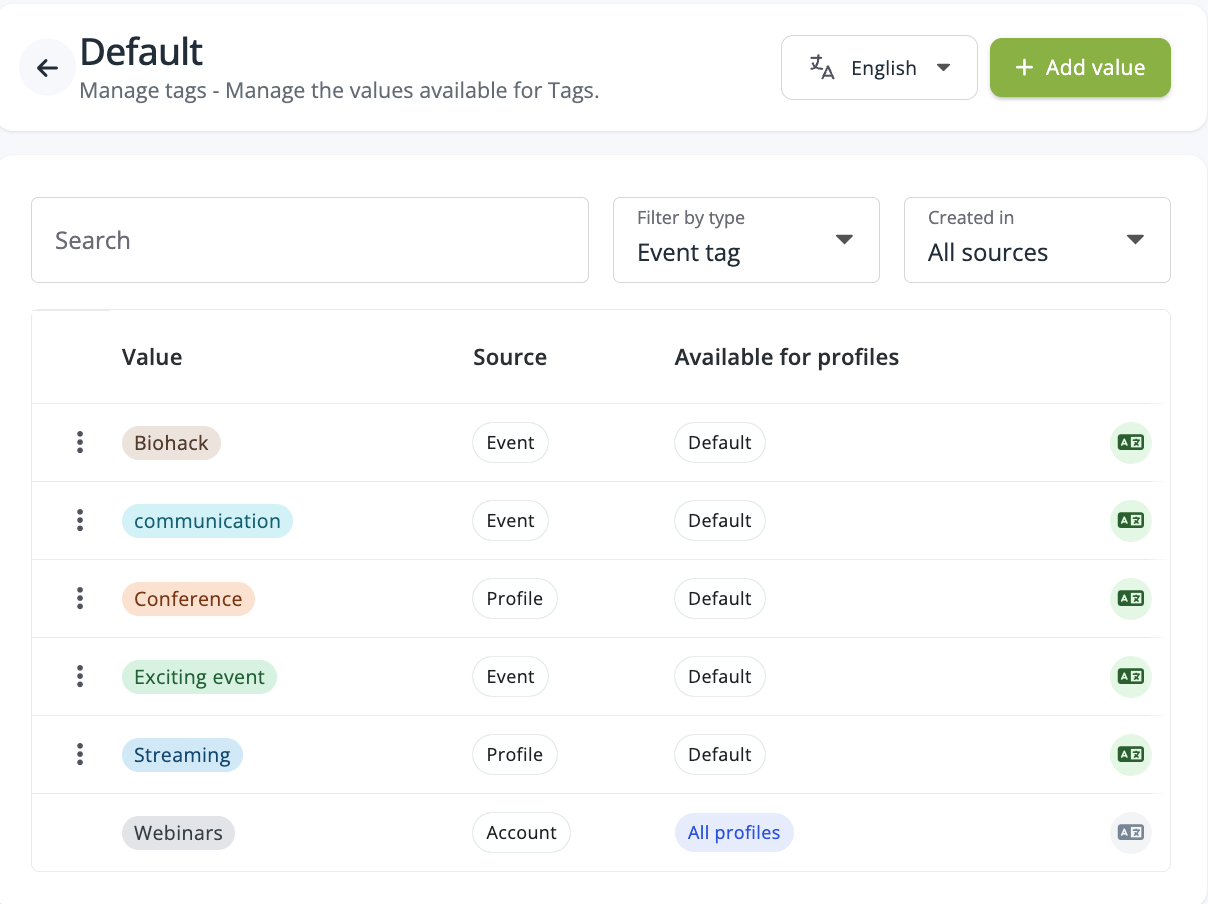
Tags are managed in Manage tags, opened from the ⋮ menu of a tag field. Click + Add value, name the tag and give it a colour, from the swatches or any custom hex code.
Renaming a tag updates it everywhere it's used, since all events and attendees share the same tag. Deleting a tag removes it from every event and attendee; if it's still in use, idloom first offers to replace it with another tag.
The Source column shows where each tag was created (account, profile, event or attendee), so you can review the tags your team added on the fly.
How do you add tags to an event?
Event tags can be added from the events list or from inside the event.
- From the events list: click the Tags cell of the event, then select tags in the dropdown, or type in Search or create a tag to create a new one. Click × on a tag to remove it.
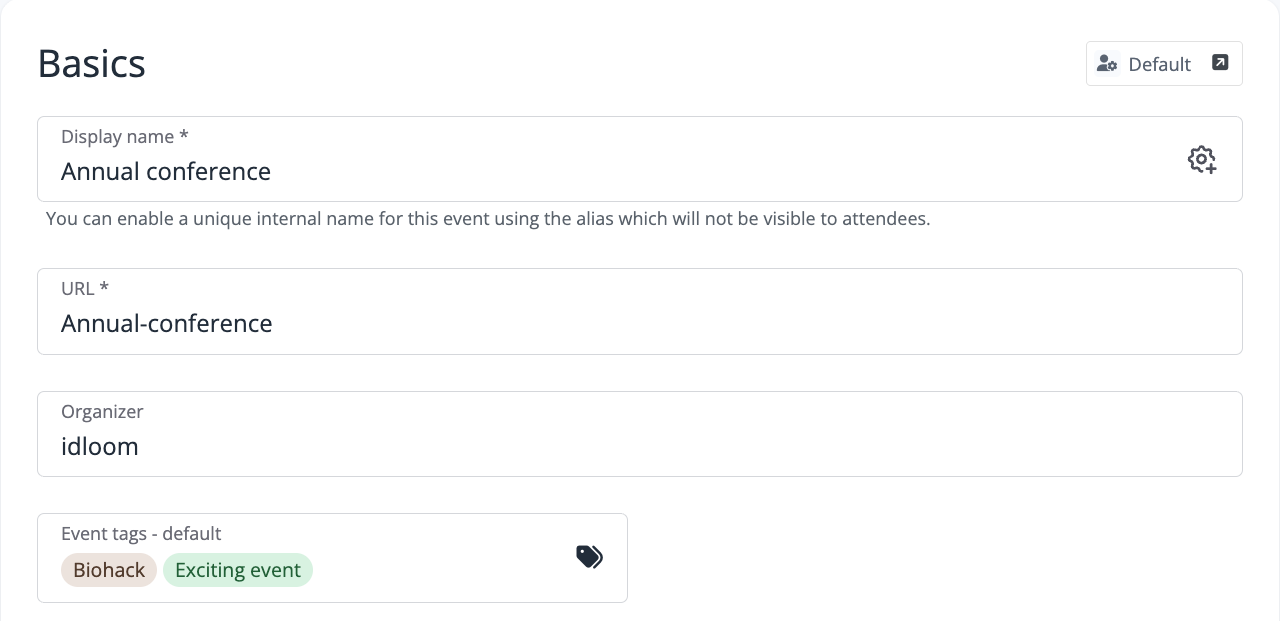
- From the event: open the event, go to General → Essentials, and use the event tag field in the Basics section.
The dropdown groups tags by tag field, for example account tags and profile tags, and only shows the tags you have access to. The Manage tags button at the bottom opens the tag list directly.
How do you tag several attendees at once?
Attendee tags are added in bulk from the attendee list of an event in idloom.
- Open the event and go to General → Attendees.
- Tick the attendees you want to tag, or tick the header checkbox to select all of them.
- Click the green gear button (More actions).
- Select Edit attendee tags.
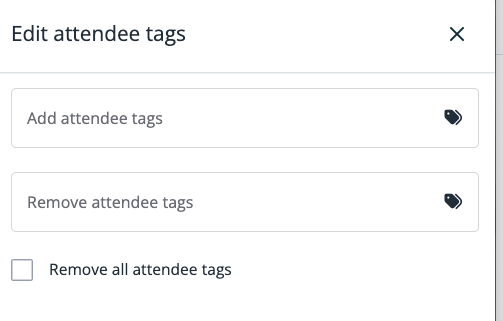
- Use Add attendee tags to add tags, Remove attendee tags to remove specific tags, or tick Remove all attendee tags to clear every tag from the selected attendees.
- Confirm the changes in the drawer.
To tag a single attendee, open the attendee from General → Attendees and edit the tags in the attendee details. Attendee tags appear in the Tags column of the attendee list.
How do you filter events by tag?
In the idloom events list, open Filter events and go to Filter by metadata. Select one or more tags in the event tag field. When you select several tags, idloom shows the events that have any of them. Select No tag to find events that haven't been tagged yet.
Only tag fields with Add to event filters ticked appear in Filter by metadata.
How do account and profile tags work together?
On idloom Corporate plans, tags can be shared across the whole account or kept within one profile, for example a business unit or a country team.
- Account tag fields are created in Settings → Events settings → Tags & metadata and shared with one, several or all profiles.
- Profile tag fields are created in Profiles → [profile name] → Events settings → Tags & metadata and used only by that profile's events and attendees.
- Permissions in a profile: account tag fields show Read and can't be edited from the profile. Profile tag fields show Update.
- The profile field takes the lead: when a profile has its own tag field, tags already set from the account field stay selected, and new tags created inline are added to the profile's field.
In every tag dropdown and filter, users see account and profile tags merged into one list, grouped by tag field. On Premium plans, the account has a single profile, so account and profile tags behave the same way.
Can you use event tags in your public event catalog?
Yes. With the Advanced catalog, available on request, event tags can become a filter on your idloom event catalog. Visitors filter your upcoming events by tag. You can also build a Group of events around a tag, for example all webinars, or share a pre-filtered catalog link with Generate URL.
Learn how to promote your upcoming events with the catalog